El Salvador
Salvadoran Migration to the Washington, DC Area
The Washington, DC metropolitan area is home to the largest Salvadoran community outside of El Salvador. Large-scale immigration began during the late 1970s and 1980s as many families fled the Salvadoran Civil War (1979–1992), seeking safety from violence and political instability. Thousands settled throughout Washington, DC, Maryland, and Northern Virginia, where strong family and community networks helped establish thriving neighborhoods. Following the end of the war, migration continued through family reunification, educational and economic opportunities, and, more recently, as some families sought refuge from violence, natural disasters, and ongoing economic challenges.
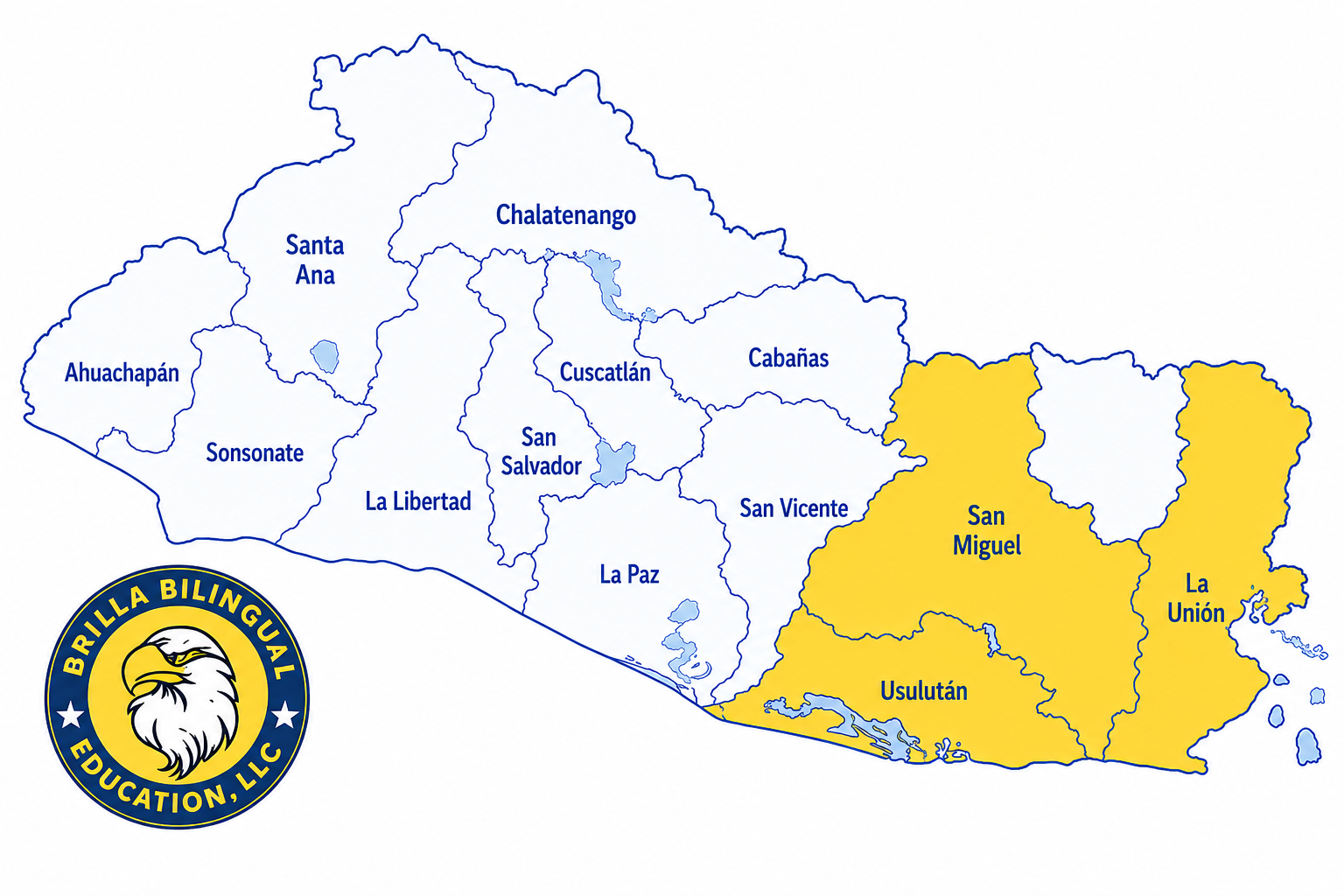
Today, many Salvadoran families in the Washington, DC, Maryland, and Northern Virginia (DMV) region trace their roots to the departments of La Unión, San Miguel, and Usulután. These three eastern departments represent the primary regions of origin for many Salvadorans living in the area and have had a lasting influence on the region's cultural landscape. Salvadoran communities have enriched the DMV by establishing businesses, churches, cultural organizations, and community institutions that continue to strengthen local neighborhoods.
Students from Salvadoran families bring rich cultural traditions, resilience, and diverse life experiences to the classroom. While Spanish is the primary language spoken by most families, educators should also recognize the importance of students' cultural identities and the strong family and community connections that contribute to their success in school.
La Unión
Communities
Intipucá
Conchagua
Santa Rosa de Lima
La Unión City
Schools
Mostly neighborhood public schools (Centros Escolares)
Rural schools may combine multiple grades in one classroom.
Students wear uniforms.
Limited classroom technology.
Strong emphasis on teacher-directed instruction and memorization.
School day: approximately 5–6 hours.
San Miguel
Communities
San Miguel
Chirilagua
Ciudad Barrios
Moncagua
Schools
Larger urban schools
More private school options
Better technology access than rural areas
Uniforms required
Morning or afternoon school shifts are common
Usulután
Communities
Usulután
Jiquilisco
Santiago de María
Schools
Mix of rural and urban campuses
Spanish-only instruction
Strong family involvement
Students are often accustomed to structured classrooms with fewer classroom technology resources